
The New MOLDING TECHNOLOGY Could Change Everything — Can Europe Keep Up?
After going through the recent news on Tesla’s manufacturing system and the developments in Chinese EV production, one thing stands out very clearly from a headhunter’s perspective:
We are not just seeing an EV transition.
We are seeing a COMPLETE REWRITE of how cars are physically manufactured.
And the center of this shift is a new generation of LARGE-SCALE MOLDING AND CASTING TECHNOLOGIES.
The New MOLDING Revolution: From Welding to “Printing” Car Structures
For over 100 years, the car industry was built on the same principle:
Thousands of stamped metal parts
Hundreds of welding robots
Long, complex assembly lines
That model is now being replaced.
At the core of the change is what Tesla is scaling aggressively:
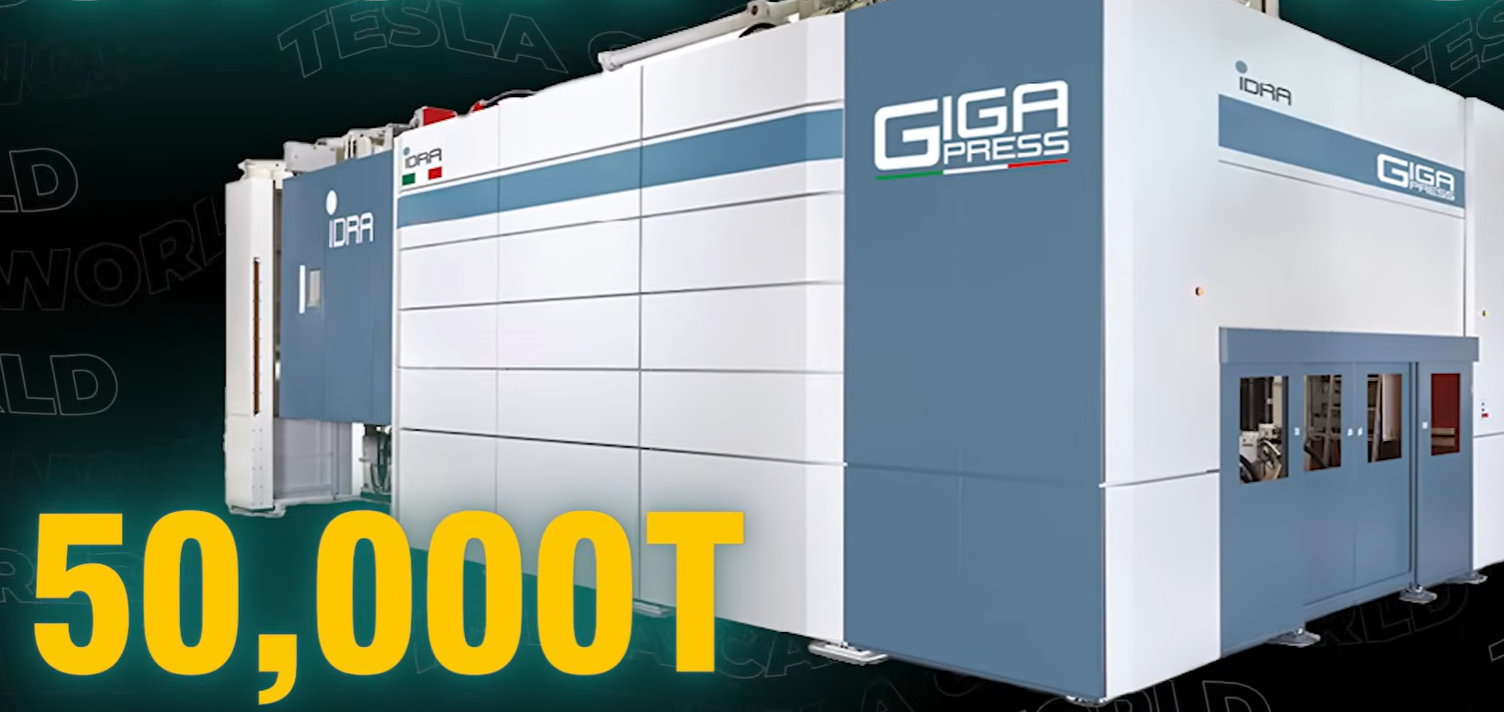
GIGAPRESS HIGH-PRESSURE CASTING SYSTEMS.
Tesla has moved from:
6,000 TON GIGAPRESS (Model Y era)
9,000 TON GIGAPRESS (Cybertruck)
toward a future vision of 50,000 TON GIGAPRESS MACHINES
This is not just “bigger machines”.
It is a completely different manufacturing logic:
Instead of assembling cars → FORMING STRUCTURES IN ONE SHOT
The idea is extreme:
A car structure is no longer welded together… it is CAST like a single industrial component.
HOW THE MOLDING PROCESS ACTUALLY WORKS
It starts with ALUMINUM ALLOY heated to around 850°C until it becomes molten metal.
But what matters is not just heat — it is PRECISION CONTROL:
• Dual furnace system (gas + electric stability control)
• Nitrogen injection to prevent oxidation
• Argon degassing to remove impurities
• Microscopic filtration to eliminate defects
Then comes the molding process itself:
• Soybean oil spray on the mold (release layer)
• Vacuum extraction to remove air bubbles
• High-speed piston injection under extreme pressure
• Millisecond-level synchronization of pressure, speed, temperature
Then:
• Rapid cooling from ~400°C to ~50°C
• “Thermal shock” locking the molecular structure
• X-ray inspection for internal cracks
The result:
A SINGLE, SOLID, STRUCTURAL CASTING with almost no weak weld points.
This is why Tesla can:
eliminate thousands of welding robots
reduce vehicle weight by up to ~25%
increase structural rigidity
shorten production cycles to seconds per casting step
CHINA IS BUILDING A PARALLEL MOLDING REVOLUTION
This is where it becomes even more important for Europe.
Chinese manufacturers are not copying — they are also innovating.
Companies like BYD are already using:
• SINGLE FRAME CAST CHASSIS systems
• HIGH VERTICAL INTEGRATION manufacturing
• Fewer components per vehicle
• Faster build cycles
• Lighter structural designs
A key example is described with Chinese aluminum chassis specialist HAN TECH, which is able to:
manage different wall thicknesses in a single casting
produce stronger structural frames
reduce cost and assembly time
improve crash safety performance
This is crucial:
China is not just building EVs.
It is rebuilding the manufacturing architecture behind them.
WHAT THIS MEANS FOR JOBS (THE REAL SHIFT FOR EUROPE)
From a headhunting perspective, this is where the story becomes very concrete.
Tesla’s hiring already reveals the direction of the industry:
• AI Engineer (Optimus, manipulation systems)
• Reinforcement Learning Engineer (self-learning systems)
• Geometric Vision Engineer (machine perception)
• Factory Software Engineer (digital manufacturing control)
• Distributed Systems Engineer (industrial-scale computing)
• Vehicle Software & Fleet Analytics Engineers
• Automation Controls Technicians
This is not traditional automotive hiring.
This is INDUSTRIAL SOFTWARE + AI + ROBOTICS + MANUFACTURING INTELLIGENCE.
THE NEW AUTOMOTIVE TALENT MODEL IN EUROPE
The shift is clear:
DECLINING (LONG-TERM PRESSURE)
• Manual welding operators
• Traditional assembly line workers
• Mechanical component specialists in fragmented supply chains
RAPIDLY GROWING (NEW CORE DEMAND)
• AI & Machine Learning Engineers
• Robotics & Automation Engineers
• Industrial Software Engineers
• Manufacturing Systems Architects
• Casting & Materials Process Engineers
• Real-time Data & Factory Intelligence Engineers
• Battery & Energy Systems Engineers
• Reliability & Diagnostics Engineers
WHAT THIS MEANS FOR EUROPEAN CEOs
This is the strategic question Europe is now facing:
It is no longer just:
“How do we build electric vehicles?”
It is:
“Do we have the talent and systems to operate AI-driven, highly automated manufacturing platforms?”
Because the winners of the next cycle will not just be car companies.
They will be:
• manufacturing software companies
• robotics-driven production systems
• AI-optimized factories
• vertically integrated industrial platforms
FINAL THOUGHT (FROM A HEADHUNTER’S PERSPECTIVE)
The most important shift is not the machines.
It is the TALENT STRUCTURE behind them.
Europe still has world-class automotive engineering.
But the industry is rapidly moving toward:
SOFTWARE-DEFINED MANUFACTURING
AI-DRIVEN FACTORIES
HIGHLY AUTOMATED CASTING SYSTEMS
VERTICAL INTEGRATION AT SCALE
And companies that fail to hire the right profiles early may find themselves structurally behind — not just technologically, but industrially.
Because in the next automotive era:
The advantage will not come from building more cars.
It will come from building them completely differently